Showing posts with label Beachcruising. Show all posts

Sunday, May 9, 2010

Campion Sail: Tom Dunderdale's 'Apple', et al.


A four plank aside half-decked Apple, gaff cutter rigged with tumblehome transom, sailing in the Alps
photos courtesy E. Reinhard.


Apple yawl dayboat, main and mizzen rigged with balanced lug sails and conventional transom
photo courtesy Tom Dunderdale, Campion Sail and Design


Apple yawl dayboat
photo courtesy Tom Dunderdale


Apple yawl dayboat
photo courtesy Tom Dunderdale


Peter Lord's 5 plank Apple 'Vips' with modified interior and his own carbon fibre spars and sail plan,
courtesy of Wojtek Baginski taken during the Raid Finland 2007 when he crewed for Peter Lord


Stitched and ready for glassing - Peter Lord's most impressive 5 plank Apple lugger with his own customized internal layout and rig. This hull is one of a number of variations based on the original 4 planker, including one with greater flare to the topsides and 3 inches more beam

courtesy Peter Lord


Vips in good company at Raid Finland, the lineup from left to right, Welsford, Oughtred, Herreshoff, Campion, Michaleck
courtesy Wojtek Baginski


Apple's Lug Yawl Sailplan- see her designer's comments below


'Pearl 16, a day sailer or beach cruiser, half-decked, with multichine stitch and tape or glued clinker-over-stringers construction. The hull is of 6mm ply, the deck and cockpit of 5 or 6mm, with centre-board and dagger-board options. The cockpit has various permutations, from deep and open, to reduced volume, through to self-draining, but all with built-in buoyancy. Pearl, with either a lug main and mizzen, gunter yawl or gaff cutter rig, is beamier, flatter floored, fuller transomed than Apple, with lead and water or water ballast.'


Here's Pearl's midsection redesigned for sleeping floors per my request


'George Holmes’ design the ‘Ethel’ of 1888 was digitised then stretched by Selway Fisher - who then drew up their own stitch-and-glue strake pattern for the hull, which I used when constructing the first one.

I further modified the appearance of the design during construction to produce the boat in the photo by altering both deck camber and sheer, and building a different deck and cockpit layout - with in particular the narrow, sweeping side-decks and coamings - as well as a new high aspect-ratio semi- pivoting daggerboard, a high aspect ratio lifting rudder and a wider, more practicable tiller (all necessary as I intended racing the boat), and altered the rig twice - both during construction and a few months after. Most construction details are different, too. Further detailed changes were listed in ‘The Boatman’ review in the October/November issue of 1992.

The final appearance of the boat - though not the hull - is different to both Fisher’s digitised design and the original ‘Ethel’. Fisher’s modified version - which he named the ‘Lillie’ - follows Holmes’ original layout of deck and cockpit, low aspect centreboard and non-lifting rudder, but with his own rig; and it is this which he offers in his on-line catalogue - though illustrated with a photograph of the changed deck and cockpit of my boat.'


"Though the gloss is no longer -some eight years later - as deep as here, you can still see your own face in the
original finish."


'Electra: with a lower, flatter and fuller floor, the lines of this canoe yawl could be likened to a compromise between George Holmes' Ethels 1 and 111, but she is longer - with more freeboard - slightly beamier and certainly more burdensome with a sharper, deeper bow for better windward work as well as a drier, more comfortable performance in a steep chop. For 7 plank multi-chine or glued clinker. Stable yet fast, attractive and able, light yet strong, the seven plank aside hull goes together reasonably quickly to give a satisfying traditional appearance with modern materials. Sealed tanks run under the side decks for a good part of the hull to provide buoyancy and strength. Provision has been made for 55 kg of water ballast if required. These hulls give a true planing performance if sailed hard, whilst retaining the noted sea-kindliness of the double-ender if sailed more gently.'


all material courtesy Tom Dunderdale/Campion sail and Design, unless otherwise noted


Tom Dunderdale's elegant distillation of the British workboat, especially those from Cornwall, Kent and Sussex, really caught my eye. His flagship boat is the Apple and her plumb bow, lug yawl rig and raking transom hit home for me, but there are many iterations/variations. Conceived with an eye to tradition, the designer states:

Apple is a sweet-sheered, originally yawl-rigged, balanced lug day-sailer that has a surprising turn of speed. From her plumb bow to her raking transom, she has very much the air of a traditional boat, but her lines reflect modern thinking more than might at first be apparent. With the original small yawl lug rig layout she is exceptionally easily controlled with finger-tip-light steering at any degree of heel, showing the inherent balance of the hull form and will heel to some 40 degrees without driving the gunwale under when hard on the wind, remaining well mannered and docile. The flair of the forward sections tends to throw spray clear and she is surprisingly dry when sailed hard. Off the wind in a breeze, she lifts smoothly onto a plane without effort or fuss. In lighter airs, she slips along in a most satisfying manner, and will even sail herself for short periods if the sails are balanced carefully. For those who regularly sail in light wind areas, the large light weather mizzen makes for a truly stunning performance. And when the wind dies in the evening, she will row surprisingly well as the quarters are well lifted, the beam moderate and the weight surprisingly light thanks to the glass/ply/glass construction. Should a more sedate approach to sailing be required, the Apple will easily accommodate sand or shingle ballast bags as she has considerable carrying capacity without spoiling her sailing lines, and such disposable ballast ensures that easy manhandling ashore is not lost. Integral water ballast tanks can be built in to the decked version, too.

Apple was designed as a rewarding, handsome, open day-sailer for large lakes, rivers and sheltered estuary waters, one that could be built in a modest single car garage on a very modest budget yet would engender a real pride of ownership, with an ability and performance to entrance and enthuse her crew, most especially when sailing in company with modern craft, and not demoralize them with indifferent or poor sailing qualities once the novelty of sailing something 'traditional' has worn off. In her original open form, she is not, however, designed for cruising exposed coastal waters in strong winds - which is in keeping with other open or even partially decked designs, traditional or modern, old or new, including some supposedly able 'cruising' dinghies and dayboats - as it would be asking too much of such a light and almost totally open boat - and such a simple, inexpensive one - and probably of her crew, too. [But note that with the substantial reduction in open cockpit space as well as increase in weight to give the necessary momentum to punch through head seas, the decked, ballasted version is more suitable for open waters. The inherent exceptional balance of the design makes for far sweeter, easier handling than the hard-mouthed antics of some portly dayboats when over-pressed, whilst the ballast provides surprising power and stability with the crew inboard. There's a general absence of slamming when driving hard through a short hollow chop with little thrown spray or when weaving through a confused head sea and partially luffing the crest and then bearing away down the back, whereas a full bowed 'U' sectioned boat in such conditions will stamp and slam if not stop, throwing spray, thin sheets or, if they're really unfortunate, solid lumps of water at her luckless crew. In such conditions, a dry, well-tempered boat truly shines, and Apple is just that.] Within the constraints of the design, there really is little on the water that approaches her - she is handsome, able and distinctive.

Digging a little deeper into the Campion website (a word of warning: at first navigating the website is a bit like learning to drive in a foriegn country, challenging, but worth the effort) I discovered a wide range of delightful small boats, most of them with a traditional feel, and all drawn with the amateur builder in mind, using modern materials and construction techniques. With some of these designs, Tom offers a dizzying array of options, allowing the builder to tailor the boat he builds precisely to his needs. In addition to the Apple, I especially like the Pearl and Electra designs (see design notes above). I am so taken with the Pearl in fact, that, notwithstanding great designs by Oughtred, Welsford, Vivier and a covey of American designers, I'm ordering plans of Pearl. Of course, it'll no doubt be a long time building, and I need to get my O'Day in this year. I've been corresponding with Mr. Dunderdale, both as a collaborator 0n this article and as a potential design client, and have found him forthcoming, generous and erudite.

Tuesday, April 6, 2010

David Nichols new Sea Eagle 16.5 'Pandion'


Designer and builder David Nichols puts his latest creation Sea Eagle 16.5 through her sea trials on Lake Huron


Plan and profile views of the Sea Eagle 16.5


The original sketches for the lug rigged cat yawl.


After sailing Pandion for a summer, David is considering revising the sail plan with a batwing main for easier reefing.


Detail of the hatch hinge, David and crew designed and fabricated all of the bronze hardware.


Bow detail


Stern light.


Another view of the stern light showing exquisite attention to detail.


all photos courtesy David Nichols,
Arrowhead Custom Boats and Canoes


The March/April issue of The Small Craft Advisor featured a boat in their Plan Study column which really caught my eye. David Nichols is a long standing Texas boatbuilder/designer who also summers in Michigan where he teaches at the Great Lakes Boat Building School. He is best known for his small canoes and fishing boats, but is branching out. His latest creation is intended to be a family of small yachts ranging from 14'5 to 27'. His design precis states that he was looking for a beach cruiser that could easily be launched from a trailer while capable of standing up to some fairly big water, The Sea of Cortez, for example, and having shallow enough draft to allow use in his local skinny Texas water. The built prototype is the Sea Eagle 16.5 Pandion. David trailed her to Michigan for sea trials last summer. He wrote a full design brief including the results of his trials in the Les Cheneaux Isles on Lake Huron for the SCA article. Originally designed as a lug rigged cat ketch, David wrote me that based on his experiences sailing her last summer he is rethinking the sail plan and working on an alternate rig, reference the drawing above of a batwing main. Here is an excerpt from David's new book, soon to be published by Breakaway Books on the 16.5 and 14.5 Sea Eagles. Plans for both boats included.

The sails


"I spent last summer sailing the boat with standing lug sails and I love lug sails. The sails are fast and easy to rig. They are reasonably weatherly and easy to handle. I particularly like the ability to brail up the sails but I felt I wanted to make some changes.

The balance of the boat was good. There was a small amount of weather helm but the helm was light and pleasant. That meant I needed the combined center of effort of news sails to match the CCOE of the old sail plan when and if I changed the sail plan.

So why did I decide to change the main sail and why did settle on a batwing? Let me go through all the sails I considered and then I think those two questions will be answered.

First, boomless lug sails are somewhat difficult to reef. It’s an involved process not easily done in open water and single handed. Also, I found storing the sails when struck but still under way a problem. It was always a wrestling match and in open water and high winds not something I wanted to do.

The oblivious change would be to add a boom to both lug sails and if I hadn’t intended to make my own sail this would have been the easiest and most cost effective solution. And a good one I might add. Actually, that’s what I did on the mizzen sail.

The first sail I considered was a boomless gaff with a foot of 8 feet. This gave about the right sheeting angle and I do like a boomless sail. The gaff sail could be scandalized (with the right gaff jaws) and I could get plenty a sail area. The main problem with this and all boomless sails for that matter is the sheeting angle off the wind. I could have compensated some with a vang off the mizzen mast and a Cunningham but that still left the reefing and storage issues.

The next choice was a boomed, loose-footed gaff sail. Scandalizing was still an option and the loose foot would allow the sail to be thriced up as well. The only problem was being limited to a 7 foot 9 inch boom (The distance between the main and mizzen mast is 8 feet) and I couldn’t get quite enough sail area.

But if I filled in the area between the gaff and the mast I came up just a few square feet short of the 101 square feet of the old main lug sail. I found that by adding just two battens I could get the batwing shape I wanted. The Batwing eliminated the ability to scandalize but I could still run the vang from the mizzen mast to the lower batten for control of off the wind twist.

Jiffy reefing could be done single handed and the whole sail collapsed on the boom captured by lazy Jacks. All this had the added benefit of a single sheet for the main and a single sheet for the mizzen. A pleasure when sailing single handed.

The final point that sealed the deal was the CCOE of both sails were almost identical. So by keeping the old mizzen sail the combined COE of both sails remained the same.

All of this does come with a price. The original rig had a halyard and brailing line for both sails (total of 4 lines), two sheets for the main and one for the mizzen (total 3 lines) and a rigging time of less than 30 minutes solo.

The new rig has a halyard for the main and a halyard for the mizzen, a sheet for the main and a sheet for the mizzen, topping lift for main and topping lift for mizzen, lazy Jacks for each sail, Jiffy reefing for first reef and jiffy reefing for second reef for both sails, a down haul for the main, a main boom and a mizzen boom, and a rigging time yet to be determined (you can bet it will be considerable longer than 30 minutes).

Is the new rig worth the extra price? For me, yes. For someone else, perhaps not. But that’s the joy of building your own boat. You get to tailor it to exactly what works for you. You’re not stuck with a one size fits all boat.

Is this sail plan set in concrete? I doubt it seriously. I will, I suspect, add the batwing to the mizzen and I may try the boat as a cat schooner. I had intended to change to a schooner but the CCOE moved too much so I abandoned that rig, for a while anyway. So many sails so little time.


There is an extensive chapter on how to make the sails for the Sea Eagles. The purpose of the chapter is to give the builder the knowledge and confidence to make the sails as well as build the boat.

I think there is a ‘completeness’ or immense satisfaction that comes with moving through the water in a boat that you built and made the sails for. Your hand connects with both the water and the wind in a very personal way. It’s a very Zen experience."

The book also has an exposition of why David chose tandem centerboards, visible in the profile drawing above.
David and his team fabricated all the bronze hardware for the boat( see the detail photos above ), and he suggests that anyone with brazing and welding kills can do the same, but adds that given the price of bronze, maybe stainless is better.
I believe there are also larger boats in the works, David mentioned a 27' and a 22' version. Stay tuned.

And, thanks David

Monday, February 15, 2010

Slider's Basecamps for Beachcruisers


Phil Maynard in his stitch & glue melonseed and Mike Wick in his Bolger Gypsy heading South.


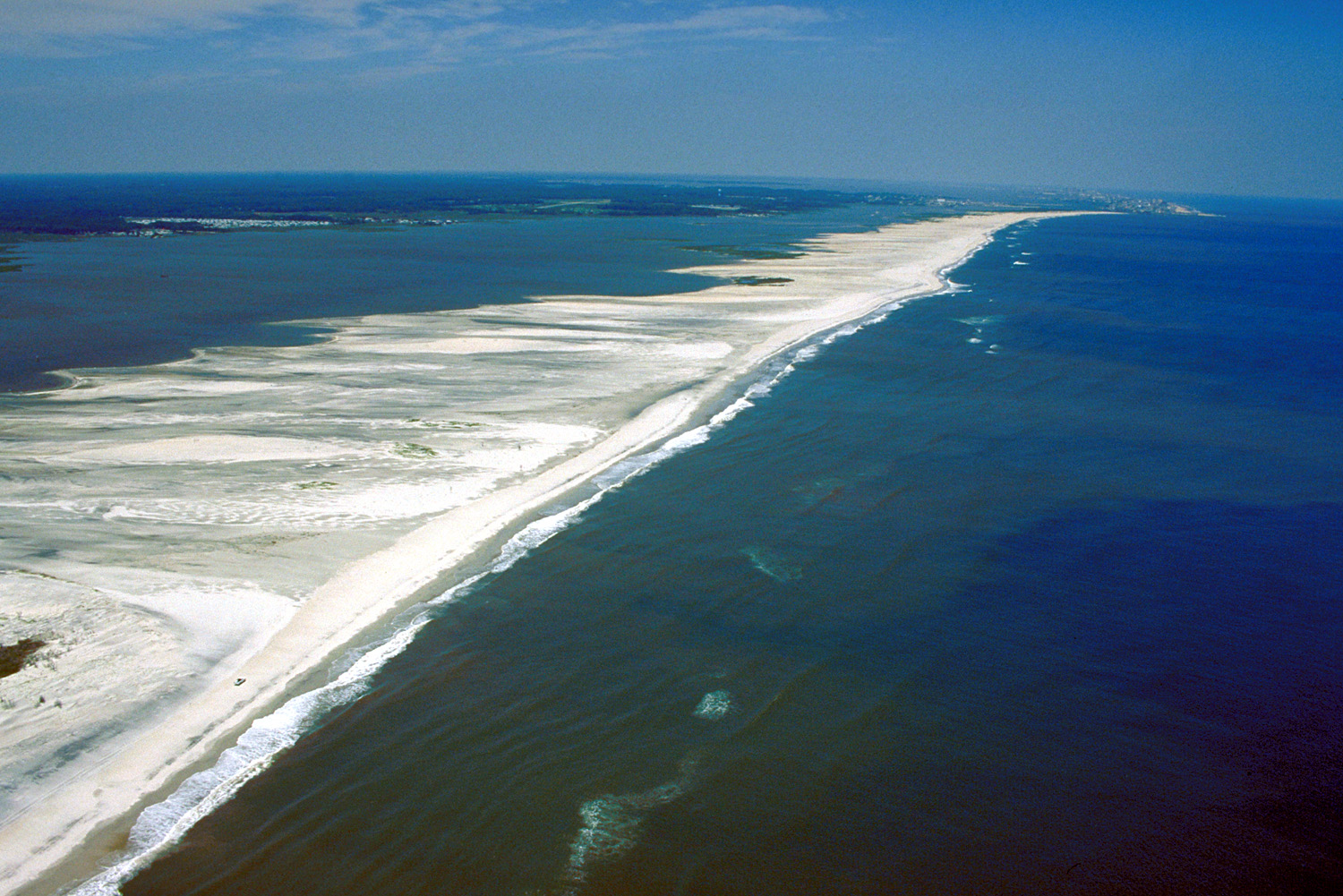
The beach at Assateague, 1/4 mile walk from Green Run.


You can see that my Gypsy has low freeboard and was prone to swamping when she was
an open boat. She was planned for rowing more than sailing.. I built the red sunbrella
deck in this picture to make her more seaworthy. It didn't help. The next winter I built
a plywood and epoxy deck that worked well.


Green Run. The campsite is up among the trees. The building is a boarded up hunting
shack, abandoned before 1965 when the Island became a national park.


John's sprit-rigged melonseed with Home Depot high-tech daggerboard clamp. They are
perfect for shallow water sailing.


all photos courtesy John Guideras


See details of the Assateague trip pictured here in the article by Mike Wick below.


Base Camps

Big Lagoon State Park, Florida

Dog Island, Florida

Apalachicola, Florida

Davis Bayou, Ocean Springs, MS

Driftwood Campground, Cedar Island, NC

Fort Walton Beach and Destin, Florida

An invitation: help me compile a free base camp database, available to all small boaters on the worldwide web.

For a while now I’ve been thinking about how to make Slider’s site more useful.

I’d like to offer information of interest to small boat sailors in general, not just to those who might be interested in a boat like Slider.

One idea came to me in part because I’ve been the book reviewer for Living Aboard magazine for a number of years. Many cruising guides have passed over my desk, as a consequence, and I’ve noticed that there are very few such guides that would be particularly useful for small sailboats. There are cruising guides for deep draft cruising boats, full of dire warnings about “reported shoaling to 3 feet” and other remarks irrelevant to small boat sailors. And then there are the guides meant for kayakers, who require nothing but on-foot access to the shore, and who must be very cautious about crossing open water.

In between, there seems to be relatively less coverage of cruising from the viewpoint of small open boat sailors, despite the fact that this kind of sailing seems to be growing in popularity. And these folks have a unique perspective as to what makes for a good cruise. Even the pattern of movement is usually different with a small boat cruise. While a live-aboard cruiser tends to pass through an area from end to end, the small boat cruiser is more likely to establish a base camp and sail forth each day in a new direction, until the area is explored for a few miles all around. It struck me that small boat cruising guides might best be organized by base camps rather than cruising routes, because spending one’s nights inside a big tent on land in relative comfort, and sailing every day is one of the most popular and luxurious ways to go cruising in a small boat. Why not, I thought, try to encourage the collection of some good base camp descriptions around the country or around the world– short articles that describe one person’s idea of a perfect base camp– its amenities and costs, a description of the place and of the surrounding sights viewable from a small boat.

When I was out cruising the coast for a few days, back in September, Slider and I visited an anchorage near Big Lagoon State Park, not far from the Florida-Alabama state line. I’d visited this well-situated park before, and the other day went back for a look. I measured the ramp, took a few pictures, and generally enjoyed the park. It seemed to me that the park had everything you’d want in a base camp, so I wrote the first piece and published it on Slider’s blog:

Big Lagoon State Park

I’m hoping my fellow small boat sailors will help me put together a selection of potential basecamps from everywhere there’s good sailing for little boats. I have a list of suggestions for the kind of information I think most of us would like to see, but I’m sure I’m forgetting lots of stuff, and I hope you’ll help me out with your suggestions and criticisms.

I think each base camp article should start with a bulleted list of basic info:

  • Name of base camp: If nameless, pick a name! Link to pertinent website if possible.
  • Brief description: One sentence summation of the base camp’s main appeal for small boat sailors.
  • Location: Country, state or province, nearby towns, mailing address, and a link to a map showing the route and a link to an online NOAA chart, if available.
  • Weather and climate: Here a link to a local weather page is nice. I like Weather Underground.
  • Fees: Entry fees, ramp fees, camping fees, etc.
  • Ramp: Depth, capacity, condition, parking, etc.
  • Amenities: a list of resources in or near the camp: shady campsites, phones, ice, grocery stores, convenience stores, service stations, ice, restaurants, motels, libraries, marine chandleries, amusement parks, other attractions within driving distance, and so on.

As many useful links as possible should appear in this first small section. I’ve undoubtedly missed some good ideas, and I’d be grateful for any suggestions for adding useful data to this list.

The rest of the piece is up to you. Whatever way you choose to get across the pleasures of visiting one of your favorite base camps is fine by me. You can develop the attractions of the site in any pattern you prefer– put it in the form of a narrative about a trip, actual or ideal, or use any other approach you think will work. I may make suggestions and edit your material a little, but I’ll ask you to approve any substantial changes before I publish the piece. I think we should keep these descriptions to under 2000 words, if possible.

Photos are very helpful, I believe, but they need not be of professional quality to greatly improve any story. Include anywhere from 3 to 8 shots, preferably sized down for the web, but I can easily do this. A shot of the ramp, a shot of an adjacent beach or dock, a couple other nice views will lend a lot of punch to the story, and give your readers a better understanding of the cruising area the base camp serves. I like pictures of living things and boats, so the best shot of all would be a beachcruiser parked on a beautiful beach, with a sailor or two busy having fun.

Base camps need not be official campgrounds of some sort. For example, I plan to write a base camp piece on a great little cruising area in my own back yard. The gateway to the base camp is a city park here in Fort Walton Beach that has nice ramps, just a couple of miles east of a string of little spoil islands in Santa Rosa Sound, created when the Gulf Intracoastal Waterway was first dredged. These islands are popular on the weekends with locals, who set up tents and spend the day swimming, sunbathing, and fishing. During the week, they are largely deserted, and can provide an almost wilderness experience just a few minutes sailing from a small but lively city, with every imaginable amenity, and across a wide shallow lagoon from the Air Force-owned portion of Santa Rosa Island, which is almost pristine.

Another possible idea, for those who like a little luxury with their cruising, is to find an inn or bed-and-breakfast in a cruising area, and make that the base camp.

Or you may know of an island with organized camping facilities that can only be reached by campers with a boat or a ferry ticket. For example, right now you can camp at Ft. Pickens on the western tip of Santa Rosa Island, if you have a boat or are willing to walk or bicycle in over a road that was destroyed by the recent hurricanes. Eventually the road will be rebuilt, but for now Ft. PIckens provides a unique kind of base camp. There are many other wonderful island base camps to be found, from Lake George in New York, to the Maine Island Trail to the Apostle Islands of Lake Superior.

I really hope folks will help me to start this moving. I believe it would be of interest to microcruisers of all sorts, particularly for those of us who sail small open boats. I can only do a limited number of these articles by myself. But I’m certain that if the small boat cruising community gets behind the idea, it will become a wonderful resource for all of us.

Contact me with your ideas!


Here's Ray's formula applied to Mike Wick's adventure sail to Assateague:


  • Name: Assateague Island National Seashore.
  • Location: Ten miles South of Ocean City, Maryland. Nearest small town, Berlin, Maryland.
  • Weather: See Ocean City, Maryland.
  • Chart
  • Fees: $10 entrance fee. Car Camping rates $20 per day. Remote campsites $5 per week. Significant reduction if over 62.
  • Ramp: Shallow sandy beach at Old Ferry Landing is fine for small boats. Larger boats at either South Point launch ramp, 1 mile west or Verrazano Bridge Ramp, off Route 611 at Sinepuxent Bay.
  • Routes: Four remote campsites on Assateague Island, 2,5,10,12 miles South of National campground. Two day, 30 mile passage South to Chincoteague Island. Eight mile passage north to Isle of Wight Bay inside Ocean City.
  • In brief: The Eastern Shore is on the primary flyover for birds migrating up the East Coast. There are extensive shallow water passages on the bayside of Assateague Island with clamming and mussel harvesting opportunities.Can be hot and buggy in the summer. Best seasons are late in the fall and early in the spring. Mosquitoes are worst after multi-day rains.

  • Many thanks to Mike Wick, who contributed this information, and the story that follows. Looking at the chart, this appears to be a paradise for small shallow draft boats.

    There were three of us in three boats, three cars, three trailers. We had decided that we would sail the length of Assateague Island, campcruising along the way.The latest weather report showed that the wind would be mostly out of the North for the next few days, so we decided that we would sail South from Assateague Federal Seashore toward Chincoteague Island. I arrived at Old Ferry Landing and launched my Bolger Gypsy, dropped off my trailer near the Ranger Station and drove South to Chincoteague. I found a quiet parking place and cell phoned Phil, who drove straight to Chincoteague and picked me up. He and I drove north in his pickup truck, launched his melonseed and launched John’s melonseed. We left their cars and trailers at the Ranger Station.Thus, we had two cars at the North end of the Passage and one at the south end.

    It was about 11 A.M. when we set sail in convoy from Old Ferry Landing in a light northeasterly breeze. We passed the Tingles and the Pine Tree campsites in smooth water with a lee from Assateague Island keeping down the waves. Seldom is the water much more than knee deep if you are outside the Intracoastal Waterway, so there is no anxiety about swamping or capsizing, you can just walk ashore. We rounded the point of the island in the channel between Green Run and the Pirate Islands.At this point, the wind had picked up enough to warrant a reef, but there was less than a mile of windward work to our destination, so we just luffed along toward our destination. By six we had reached our remote campsite at Green Run, ten miles south of the large campground at the Federal Seashore.

    Green Run is a nice shady campground with picnic tables, fireplaces for each group, and a portapotty. but there is no potable water, so we had each brought three gallons with us for drinking and cooking. A quick meal and bed in our tents; we were too tired for a campfire.It is a short walk to the ocean with a beautiful beach, and we had a quick swim before bed.

    The next day was sunny and light air, just enough wind to ghost along. That section of the passage is an intricate maze of quite shallow channels inside swampy islands. We beat up a river to the most distant campsite on the Island, Pope Bay wehre wwe stopped for lunch and walked over to the ocean beach. Here we realized that, if we kept sailing, we could finish our passage that night, so we rushed out to Chincoteague Bay and sailed across the Maryland/Virginia border. It was a lovely plain sail beat in a brisk Southeast breeze of maybe 12 miles an hour wind. We passed to the East of Wildcat Marsh, on the northern tip of Chincoteague, tacking in close company to the haulout at Quip Hole Road, just inside Morris Island.

    Then came the strenuous part. I walked into Chincoteague to retrieve my car, then I drove the others to Assateague for their cars. It was dark by the time we got our cars and trailers back to the ramp, but we were practiced at packing boats on trailers, so it went smoothly even in the dark. What could have been a problem, we decide to drive straight home. We probably should have stopped at a nearby motel, but we made it safe home about eleven, even though we were tired and bug bit. We had made a nice thirty mile, two day passage in company and had seen parts of the refuge that were new territory for us.

    Posted in: Base Camps for Beachcruisers, Cruising, Sailing.